


Celebrating the Christmas Season in Los Cabos
Sunshine, water sports, and beautiful beaches…Yes, it’s Christmastime in Los Cabos.

The Christmas tree in the town square of Cabo San Lucas, Plaza Amelia Wilkes, before the decorations have been added.
Visitors to our Land’s End paradise during the holiday season aren’t going to find themselves getting in any snowball fights. And at first blush—not from the cold mind you, it’s practically balmy —Los Cabos is an unlikely place to fall under the spell of the old yuletide spirit.
But Christmas is indeed a wonderful time to visit our Land’s End paradise. Hotels and restaurants offer holiday meals, shops showcase colorful seasonal decorations, large Christmas trees are displayed in the center of many plazas, and nacimientos (nativity scenes) are rather commonplace. The most spirited part of the season, however, is comprised of the holiday parties, parades and other festivities that stretch from the middle of December through early February. Yes, February.
For visitors, this time of year provides a wonderful glimpse into México’s Catholic culture, and certainly the Christmas season here is more overtly religious and less blatantly commercial than in the United States, where the season always seems to kick off with Black Friday, the shopping orgy that falls hard on the heels of Thanksgiving.
For the uninitiated, here’s a brief guide to the major holidays:
Las Posadas
Las posadas are a remembrance of the journey of Joseph and Mary from Nazareth to Bethlehem. From December 16 through Christmas Eve—in Spanish, Nochebuena—candlelit processions and reenactments of this journey culminate with admission to local houses or churches, symbolic stand-ins for “the inn,” or la posada. The nine-day period is also a symbolic representation of Mary’s pregnancy with the Christ child. Christmas Eve is the highlight of the holiday season. It marks the last night of the posadas, and the birth of Jesus is celebrated at midnight. Typically, such celebrations include a visit to a midnight mass, followed by dinner and the opening of gifts. Christmas itself is more low-key, and a day to enjoy leftovers. More information about Las Posadas
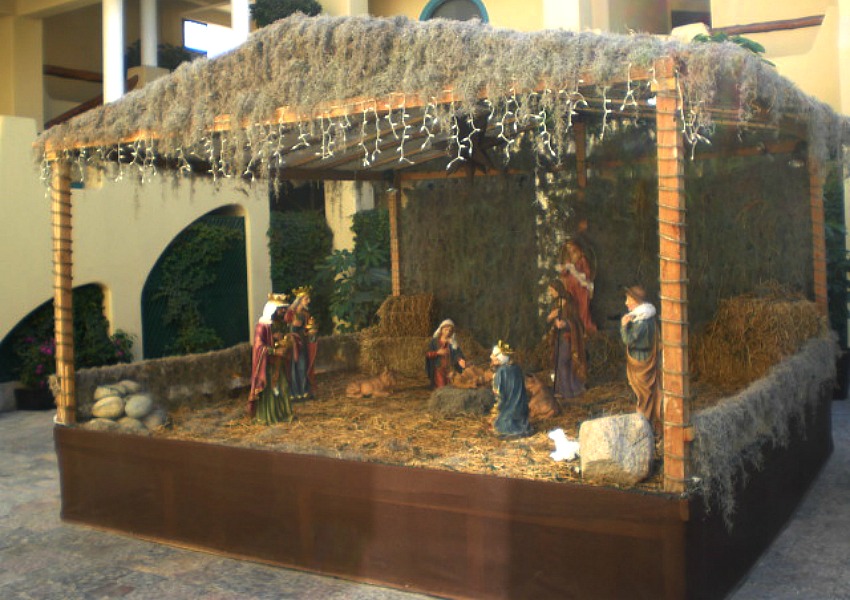
A nacimiento, or nativity scene, at Plaza Bonita in Cabo San Lucas.
El Día de los Santos Inocentes
Childermas, more commonly known as Holy Innocents Day, on December 28 is a remembrance of King Herod’s massacre of male infants in Bethlehem. The bloody decree was instigated in an ill-fated attempt to prevent the loss of his throne due to the birth of Jesus, which had been prophesied to him by the three wise men. In México, El Día de los Santos Inocentes is roughly equivalent to April Fool’s Day in the United States. Jokes and pranks are relatively common, and any unusual statements or irregular requests should be treated with a healthy amount of skepticism.
Nochevieja
New Year’s Eve is a night to party and welcome in the New Year, and visitors who want to avoid the downtown bar scene will find there are several elegant soirees scheduled at area hotels. For locals, it’s a day of food and celebrations. My favorite are the incredible fireworks displays to usher in the New Year, as well as the tradition of the twelve grapes. Médano Beach has the best fireworks show—it can be viewed from area bars and restaurants like Mango Deck and Baja Cantina—but visit any area neighborhood and you’ll see children setting them off. As to the grapes, it is a Spanish tradition to eat 12 of them very quickly—before the clock chimes twelve times at midnight—to ensure good luck during the ensuing twelve months. Each represents a wish. On New Year’s Day, leftovers are once again the staple for residents. If you’re visiting, I recommend an afternoon of bowl games and pub grub at one of the downtown sports bars.
El Día de los Tres Reyes
The Day of the Three Kings honors the wise men—Melchior, Caspar, and Balthazar—who traveled to Bethlehem with gifts of gold, frankincense, and myrrh for the baby Jesus. In México, El Día de los Tres Reyes is celebrated on January 6 with dinners and family get-togethers, and offers the last seasonal opportunity for children to open presents. The holiday is also notable for its signature treat, a circular sweet bread called rosca de reyes. A miniature representation of the baby Jesus is hidden inside the bread, and the person who finds it is expected to throw a tamales party for Candlemas on February 2, the date that marks the official end of the holiday season. Atole is considered a perfect accompaniment for the tamales.
Options for Christmas Dinner in Cabo San Lucas and Los Cabos.